Stem Cells!
What is a stem cell transplant? In fact, what is a stem cell? Lets explore these questions and more.
9/24/20232 min read
When you hear the word transplant, you probably picture someone on an operating table, being cut open and having their heart taken out and replaced. Before I was told I needed a stem cell transplant, I would have thought the same, however the reality is very different. In this article I’ll outline the process, as well as talking a little about my experiences.
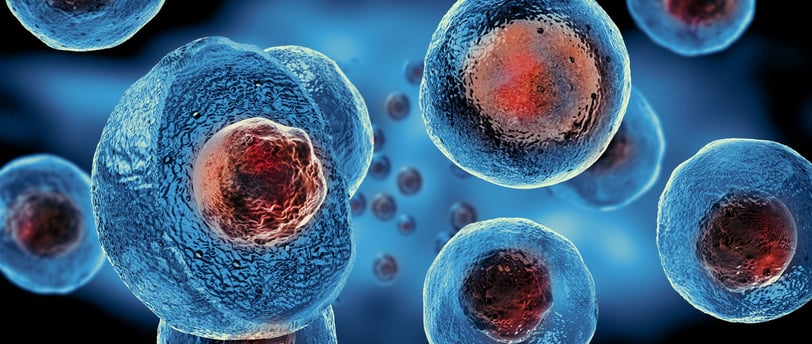
So first of all, what are stem cells? Well, they’re special cells that are created in the bone marrow that can then turn into other types of blood cells. There are three primary types of cells they typically become;
Red blood cells, which are responsible for carrying oxygen around the body
White blood cells, which help fight infection
Platelets, which help to stop bleeding
There are two main types of stem cell transplants, autologous and allogeneic. In an autologous transplant, the patient has their own stem cells harvested and stored. They then receive chemotherapy, before having their own stem cells reintroduced into their body. There are a number of advantages to autologous transplants over allogeneic, chief among them being the fact that there is no risk of graft rejection, since the stem cells are from the same person receiving them.
In an allogeneic transplant, stem cells are harvested from a donor and then transplanted into the patient. This is usually a close family member, such as a parent or sibling, because they are more likely to be a good match with the patient, which reduces the risk of rejection. However, in my case I needed an unrelated donor, because the condition I was having the transplant to treat was genetic. With this procedure comes the risk of graft versus host disease (GVHD), which happens when the grafted (donor) cells recognise the host as foreign and attack the recipient’s body. This is common, and mild GVHD is generally viewed as being a good thing, because it shows that the new immune system is actually working. This commonly manifests as skin rashes, nausea, diarrhoea and vomiting.
After the transplant, the patient takes immunosuppressive medication, such as prednisolone, which help to reduce the risk of GVHD. They also have to take a range of prophylactic medication, since they essentially have no immune system, and so common infections pose a greater danger, and can be life threatening. For me, I had to take a wide range of drugs;
Mycophenolate mofetil (MMF)
Cyclosporine
Penicillin
Aciclovir
Co-trimoxazole
Leviteracetam
Prednisolone
In most cases, patients will begin their childhood vaccinations roughly a year after the transplant. However, in my case I was also receiving replacement immunoglobulin to treat a condition called HLH. The transplant team and immunologists I see agreed it would be best to wait until I was off the immunoglobulin before I started my vaccines, because that would increase the chances of me having an immune response to them. I’m currently in the middle of my vaccinations, and hopefully I’ll soon be able to come off some more of the medication I take!
While I certainly wouldn’t say I’ve enjoyed the transplant (not by a long stretch!), I’ve definitely learned a lot, and I’m incredibly grateful to everyone involved, from the immunology team in Cardiff to the transplant team in Newcastle. I owe them my life, and I can never thank them enough for all they’ve done for me.